IT · 2026-10-25
Pennsylvania Makes Disclosure Mandatory for AI-Generated Ads…What Content Is Covered?
The U.S. state of Pennsylvania has enacted a law requiring labels on ads generated by AI or significantly altered with it. However, questions remain about how “substantially modified content” is defined and how broadly the exceptions apply.
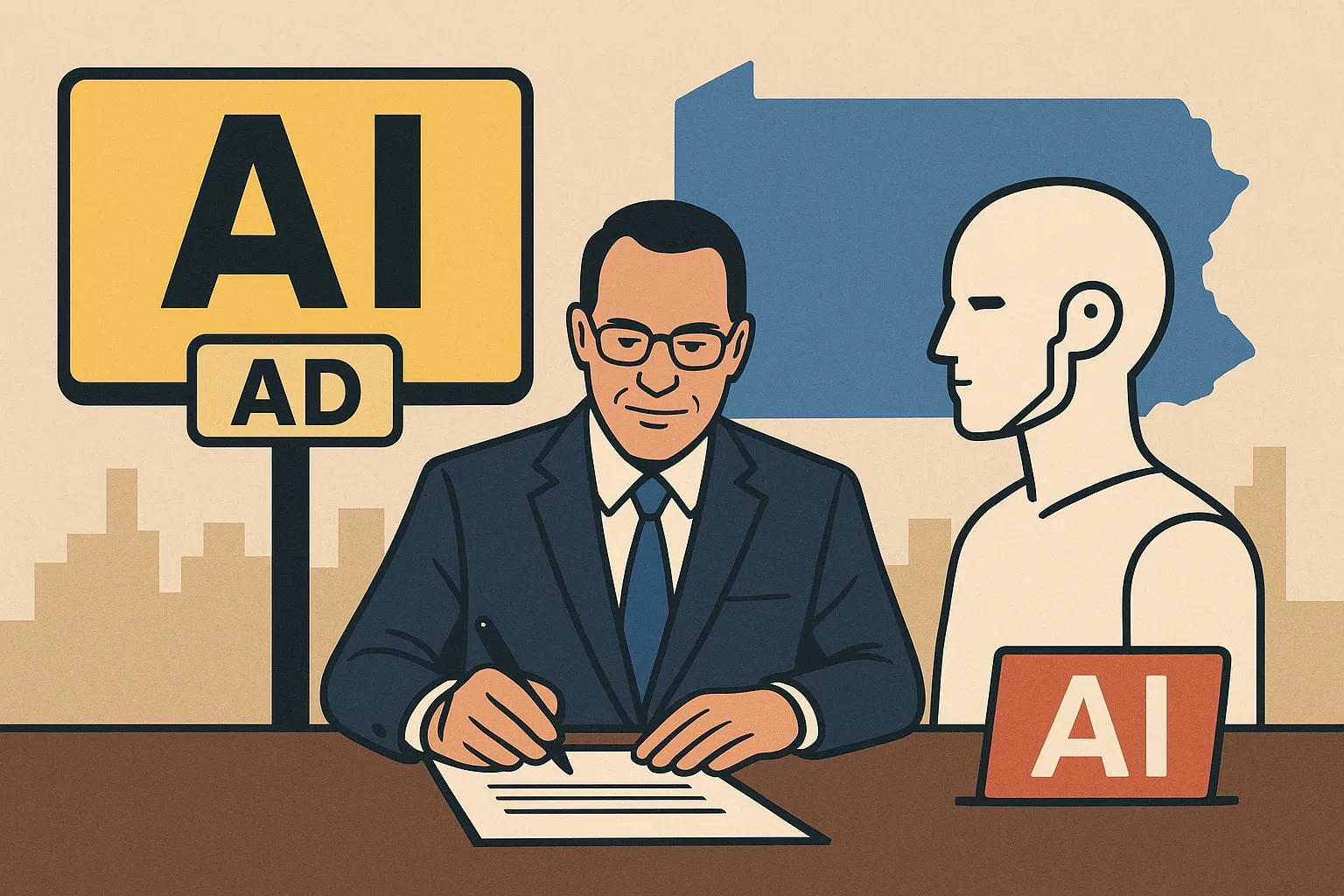
As AI-generated ad images and videos become increasingly realistic, concerns are also growing that consumers may find it harder to tell real footage from synthetic content. Pennsylvania has now introduced a law requiring disclosure for such ads.
According to The Verge, Pennsylvania Governor Josh Shapiro signed the “AI Deceptive Advertising Act” on Thursday. Under the law, advertisements that are generated by artificial intelligence or significantly modified with AI must include a label indicating that AI was used. The rule applies not only to still images, but also to video, audio, and text ads. The disclosure must also be adapted to fit the ad format.
The law is not limited to large TV commercials from major companies. According to the article, even smaller-scale ads, such as a restaurant flyer, could fall under the rule. It also applies regardless of where the ad was created, meaning an advertisement made in another state may still need a disclosure if it will be aired in Pennsylvania. The law was introduced as one of the early examples among U.S. state laws requiring labels for AI-generated content.
That said, there is still room for interpretation when it comes to what content actually needs to be labeled. The standard for what counts as “substantially modified” may be subjective, and the law exempts satire, parody, commentary, criticism, and content that is clearly fictional. In particular, questions remain about what should be considered “clearly fictional,” and what kinds of expression could mislead consumers about a product or service.
So the significance of this law lies in both its step toward formally requiring AI disclosures in advertising and the fact that it has not yet drawn a fully clear boundary in practice. Unless the labeling standards are made more specific, advertisers and platforms may struggle to determine which content needs a disclosure. If the law is to fulfill its goal of giving consumers clearer information, how the exceptions and the scope of “substantial modification” are interpreted will be a key issue.
Related search terms
#Pennsylvania AI ad disclosure law#AI-generated ads label requirement#AI deceptive advertising act#substantially modified content AI ads#Pennsylvania advertising law#satire parody exception AI ads#AI disclosure in advertising