IT · 2026-11-15
From Beating Lee Sedol with AlphaGo to a Nobel Prize… Even Hassabis Didn’t Expect ChatGPT’s Rise
A look at Infinite Machine, the book about Demis Hassabis’s journey through AlphaGo and AlphaFold. It examines how ChatGPT reshaped the course of AI competition and what Hassabis thought about language.
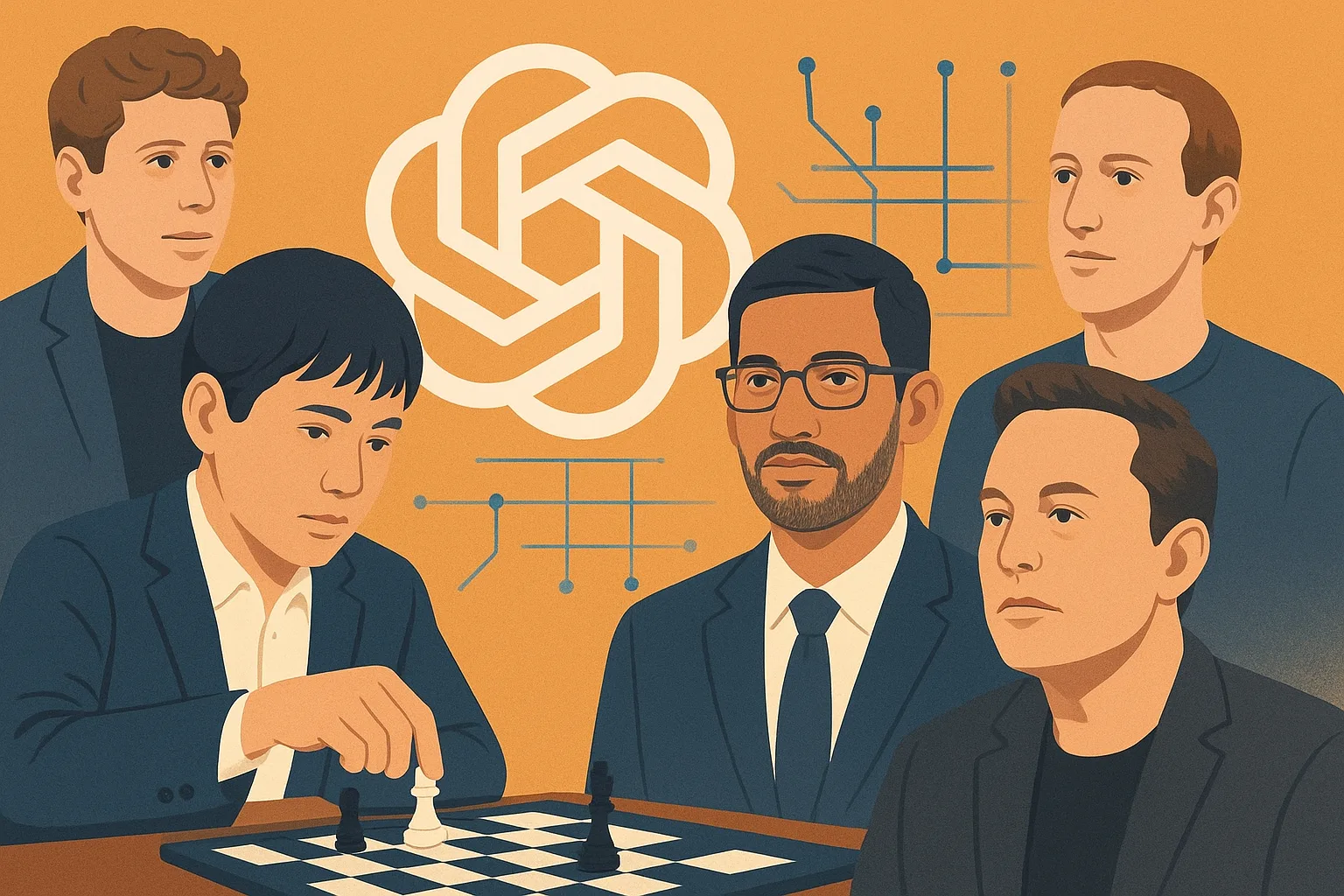
In 2016, AlphaGo’s match against Lee Sedol in Seoul showed the world just how far artificial intelligence could go. Demis Hassabis, who led the project, later won the Nobel Prize in Chemistry for developing AlphaFold, an AI system that predicts protein structures. Yet even he, the man behind AlphaGo and AlphaFold, did not foresee the speed or scale of the changes brought on by ChatGPT.
Sebastian Mallaby’s book Infinite Machine follows Hassabis and the rise of DeepMind, along with the competition and debate surrounding AI. According to a review introduced in Kyunghyang Shinmun, the author interviewed more than 100 people, including DeepMind researchers, entrepreneurs, investors, and rivals, to capture the other side of AI innovation. Major figures in the tech world, such as Sam Altman, Elon Musk, and Sundar Pichai, also appear in the book’s backdrop.
Hassabis’s path was unusual from the start. He first drew attention as a chess prodigy at age five, then worked as a game developer in his teens. But what he ultimately pursued was not wealth; it was understanding the principles of intelligence in order to make sense of nature. When he founded DeepMind in 2010, the idea that human-like AI could be built was far from widely accepted. As the company grew, he had to persuade investors, and the book explains that the decision to join Google was also driven by practical needs: funding and computing resources.
One of the most interesting parts of the book is the difference between Hassabis’s view and OpenAI’s. Hassabis doubted whether language alone could lead to human-level intelligence. He saw language as a symbolic system separated from real-world experience. OpenAI, by contrast, believed that vast amounts of language data could provide clues to human thought. After ChatGPT made such a splash, the book says Hassabis came to realize that language is more closely connected to reality than he had thought.
That shift also influenced the direction of AI competition. Google and DeepMind moved forward with Gemini, while voices calling for a slower pace out of concern over AI’s risks grew louder alongside arguments for accelerating progress. The book highlights how Hassabis chose to remain at the center of that competition. In other words, the race in AI development had become more than a contest between companies; it was now about how quickly the technology should advance and how it should be managed.
AlphaGo’s victory and AlphaFold’s achievements alone do not fully define Hassabis. Infinite Machine is a book that shows both his scientific ambition and the limits of his judgment, while also laying out AI’s promise and its risks. Hassabis reportedly sees himself as a “cautious optimist.” He acknowledges that AI could become a threat to humanity, but believes that with enough time and the right approach, the problems can be solved. ChatGPT’s arrival also changed the way he thinks about AI. That, in turn, shows even those confident in AI’s future how much of a variable each new technology can be.
The main points of this article were compiled based on Kyunghyang Shinmun’s review of Infinite Machine. The book is written by Sebastian Mallaby, translated by Lee Jun-geol, and published by Wisdom House.
Related search terms
#Demis Hassabis#AlphaGo and Lee Sedol#AlphaFold Nobel Prize#Infinite Machine book review#ChatGPT and AI competition#DeepMind and Google#OpenAI and language models