AI · 2026-10-20
AI Basic Act Disclosure Requirements: Is a Watermark Enough? Experts Suggest Improvements
After the AI Basic Act took effect, suggestions have emerged that the grace period should be used to refine who is responsible and how AI-generated content is labeled. Key issues include assigning obligations according to the actual operator and using C2PA and invisible watermarks to verify provenance.
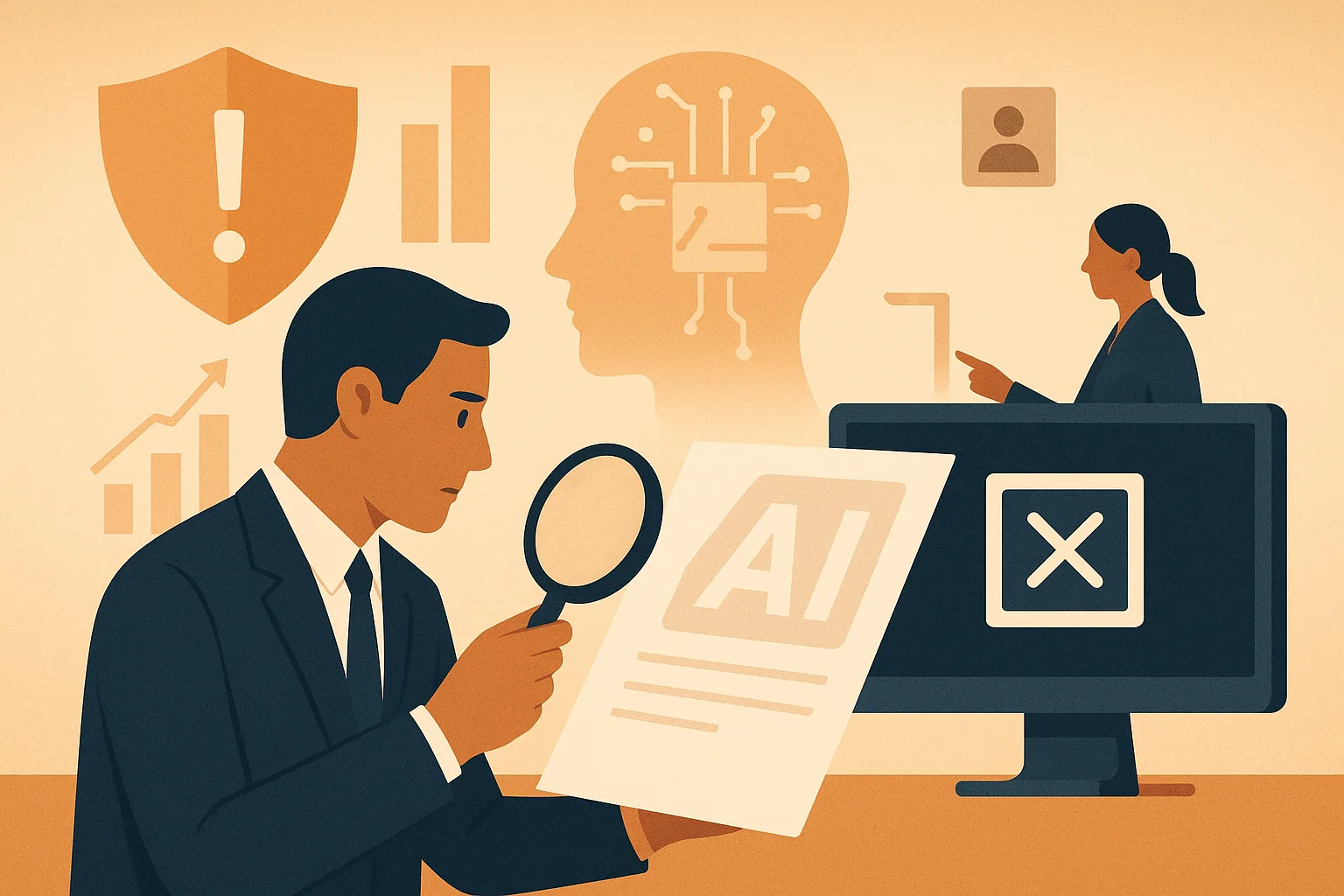
If you add a watermark to an AI-generated image or video, does that really tell people where it came from? A visible label alone can be removed during editing, which has drawn criticism. As discussions continue after the AI Basic Act took effect, experts are suggesting that responsibility should be divided in a way that reflects real-world operations, and that a system should be put in place to technically verify the origin of generated content.
Who should take responsibility: the developer or the operating institution?
At the 63rd AIIA breakfast forum held by the Korea Artificial Intelligence Industry Association at EL Tower in Seocho-gu, Seoul, Associate Professor Park Sang-cheol of Seoul National University School of Law pointed out that the party subject to regulation for high-impact AI and the party actually operating it may not be the same. For example, even if the company that supplied the system to a public institution is responsible for conducting an impact assessment or notifying users that AI is being used, it is difficult for that company to carry out those tasks on behalf of the institution’s operation.
On the other hand, if all of those obligations are handed over entirely to operators, the burden could become excessive across the many industries that use AI. Park’s point is that obligations need to be adjusted depending on what the system developer/provider and the actual operator each do. Since at least one year of guidance is expected after the AI Basic Act comes into force, refining the division of responsibility in detail has emerged as an important task.
From watermarks to “provenance verification”
There were also calls to improve how AI-generated content is labeled. Visible watermarks can be removed through image editing and other processes, so labeling alone cannot fully guarantee provenance. Park proposed using invisible watermarks or metadata, along with platform support to detect and display them.
That said, how far labeling obligations should extend to people distributing AI-generated content requires separate discussion. The idea is that society should decide whether to focus on high-risk areas such as sexual crimes or deception of consumers and investors, or whether to expand the rules to AI-generated content more broadly.
Kim Dong-hwa, managing director at MarkAny, explained that rather than stopping at detecting whether content is AI-generated after the fact, it is important to record provenance information from the generation stage itself. The alternative he proposed, C2PA, is a common technical standard that records who created the content and its production and editing history, helping verify provenance and authenticity. He also suggested combining it with invisible watermarks to help track provenance in case metadata is lost during distribution.
The effectiveness of labeling obligations increases when technology and policy are in place together. Suggestions were also raised to apply provenance-recording technologies like C2PA not only to images and videos, but also to documents such as PDFs, and to support platform functions for detection and labeling. However, these were expert suggestions made at the forum, and the actual scope of obligations and how they will be operated will require further review and social consensus. Going forward, the key issue in the discussion over improving the AI Basic Act will likely be how realistically it can clarify who is responsible and create a workable foundation for verifying the provenance of generated content.
Related search terms
#AI Basic Act disclosure requirements#AI-generated content watermark#invisible watermark AI#C2PA provenance verification#AI content labeling#high-impact AI regulation#AI Basic Act grace period