AI · 2026-11-14
United Airlines Blocks AI Agents from Booking Flights as Company Responses Diverge
As AI agents begin handling flight searches and even bookings, United Airlines has blocked third-party AI from accessing its reservation system. Citing customer data protection and compliance concerns, the airline’s move stands in contrast to companies such as Southwest Airlines, which has offered AI search features, showing that strategies are splitting in different directions.
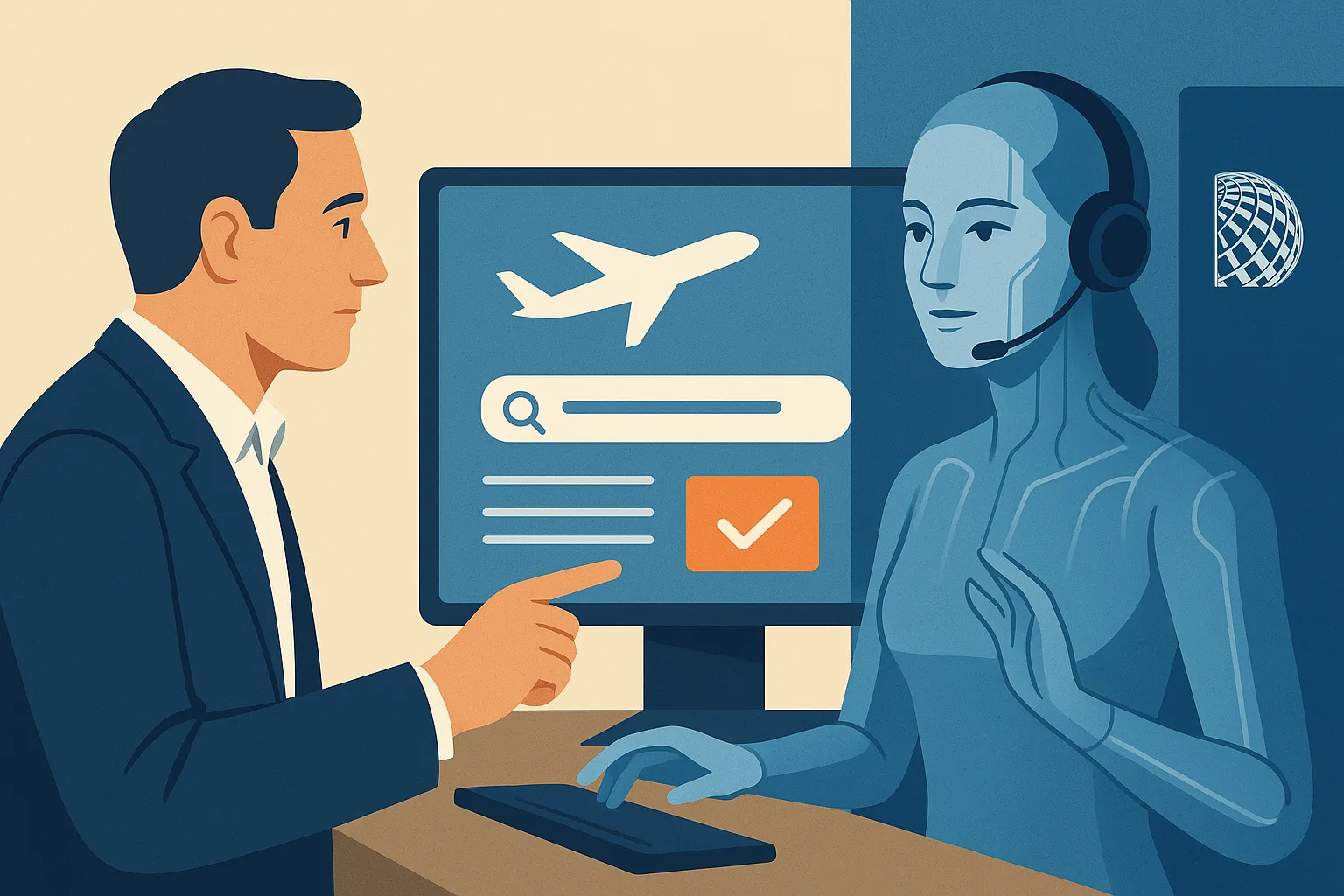
Handing over everything from flight searches to bookings to an AI assistant is becoming a real possibility. But not every company is welcoming that shift. United Airlines has decided to restrict third-party AI agents from accessing its platform to book flights. The result is a mixed response across the industry, with companies making different choices between convenient automation, customer data protection, and compliance.
United Airlines said its concerns include the risk of exposing sensitive customer information and the possibility of violating Federal Aviation Administration (FAA) and Department of Transportation (DOT) regulations. CEO Scott Kirby has described AI as a useful tool for solving operational challenges and complex problems, but also said the company will take a cautious approach to agentic commerce. He also explained that the airline does not want to create another intermediary.
AI agents are not just answering questions anymore. They are personal assistant-style services that can carry out multiple steps according to a user’s instructions. Unlike traditional chatbots, they can go beyond looking up schedules or products and actually complete transactions. That added convenience can be appealing when an AI is involved in booking and payment on a user’s behalf, but for companies it raises questions about how customer information is passed along and how responsibility for the booking process and compliance will be managed.
Company responses are diverging. Amazon has blocked Meta’s AI agent “Muse” from shopping on its site, while Southwest Airlines allows users to search its flights and fares in ChatGPT through a ChatGPT plugin. That said, supporting flight searches and allowing an AI to handle bookings are two different things and should be viewed separately.
AI and airline pricing are also drawing attention. The U.S. Federal Trade Commission (FTC) has ordered nine major airlines, including United Airlines, Delta Air Lines, and JetBlue Airways, to submit information on how AI is being used to determine individual ticket prices and how customer data is being used.
Whether AI agents become a new gateway for travel booking will likely depend on more than just convenience. Customer data protection, transaction transparency, and regulatory compliance all need to be addressed together. For airlines, key choices may include whether to let outside AI handle the booking process, open only search features, or strengthen their own services. For now, companies like United Airlines that limit access and others like Southwest Airlines that offer certain functions are likely to coexist.
Source: AI 비서가 항공권 대신 예약?…유나이티드항공은 막았다
← Back to articles