AI · 2026-11-10
Samsung Electro-Mechanics MLCC Lead Time Hits 61 Weeks… AI Server Demand Drives Long-Term Contracts and Price Hikes
As demand for high-capacity MLCCs used in AI servers rises rapidly, the delivery time for some Samsung Electro-Mechanics products has stretched to as long as about 14 months. With supply tightening, customers are moving to secure volumes through long-term contracts, and prices for some products are also rising.
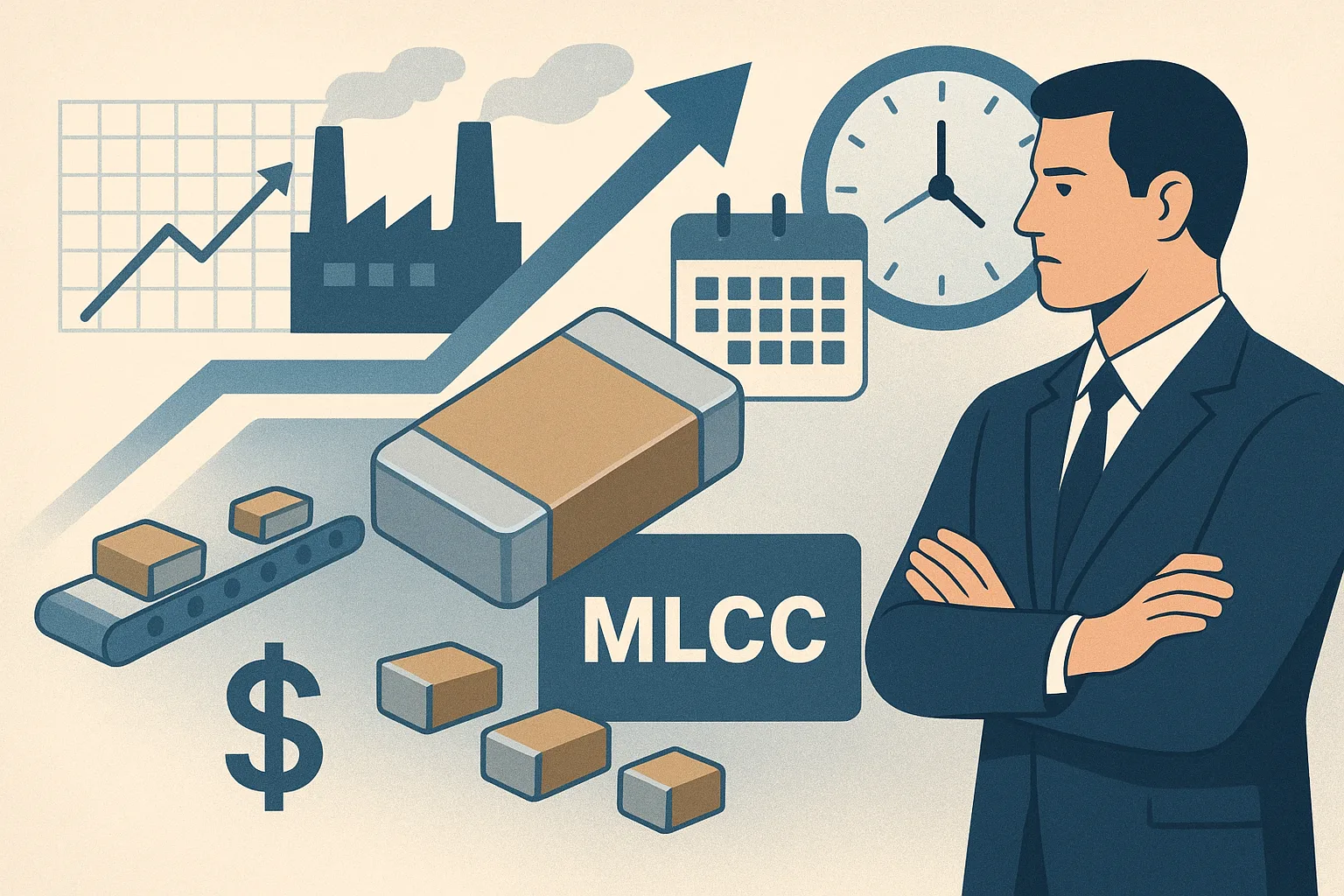
Competition around AI servers is affecting not only semiconductors but also the supply of MLCCs, a key component. As the power and server performance needed for AI computing increase, orders for high-capacity MLCCs are growing, and for some Samsung Electro-Mechanics products, customers now have to wait about 14 months from order to delivery. With supply tightening, price increases and long-term supply contracts are emerging at the same time.
Some products now face a 61-week lead time
According to a report by Financial News, the lead times for seven Samsung Electro-Mechanics MLCC items tracked by electronics parts distributor Digi-Key rose from 29 to 31 weeks at the end of July to 61 weeks last month across the board. Compared with the roughly 12-week lead time that is generally considered typical in the MLCC industry, this is an exceptionally long wait. In particular, the 47 microfarad (μF) products used in AI servers and other applications were out of stock for three consecutive months starting in August, and replenishment is now expected in January next year.
An MLCC is a component that temporarily stores electricity and releases it when needed, helping stabilize the voltage inside electronic devices. It is used not only in GPUs that handle computation inside servers, but also in CPUs, memory, and other components. As the computational load and power consumption of AI systems increase, demand for high-capacity products that can manage power more stably is also likely to rise.
Expanding demand and limited supply
A TrendForce analysis cited in the report explains that as AI use expands beyond training into inference and AI agents, demand for CPUs and related components is also increasing. The growing demand for high-capacity MLCCs used in CPU motherboards and DDR5 memory modules was also cited as a factor adding to supply pressure.
The report said Samsung Electro-Mechanics holds more than 40% of the AI server MLCC market. Because this product category must deliver high capacity and reliability within a very small form factor, the number of suppliers capable of producing it is limited, and expanding manufacturing capacity also takes time. During a recent earnings presentation, Samsung Electro-Mechanics said it is supplying 1005-size 47μF products to new platforms at big tech companies and projected that demand for the product would grow about eightfold by 2027. This is the company’s own outlook, and actual demand and supply may vary depending on market conditions.
Stable supply is becoming more important than price
The supply shortage is also affecting prices. According to an iM Securities analysis cited in the report, Samsung Electro-Mechanics is understood to have raised MLCC prices starting in the fourth quarter for some direct customers. Analysts say price increases are also being seen across the broader industry.
Customers are looking to secure needed volumes in advance through long-term agreements (LTAs). Samsung Electro-Mechanics has either signed or is negotiating long-term contracts for high-value-added MLCCs with about 50 customers, and next year more than half of MLCC sales are expected to come from such contracts. The company is also expanding production capacity to match customer demand, and its third plant under construction in Calamba, Laguna, Philippines, is targeted to begin operations in the first quarter of next year.
This supply situation shows how AI server investment is rippling through the broader component supply chain. However, factory expansion cannot respond to demand immediately, and how long these extended lead times last will depend on future production and order trends. For customers, not only price but also whether they can receive components when needed has become crucial, so long-term contracts and capacity expansion are expected to remain key variables in the MLCC market.
Source: 삼성전기 'MLCC' 품귀… 가격 올려도 장기계약 몰린다
Related search terms
#Samsung Electro-Mechanics MLCC#AI server MLCC demand#MLCC lead time 61 weeks#high-capacity MLCC prices#long-term supply contracts MLCC#Samsung Electro-Mechanics production expansion#47μF MLCC for AI servers