AI · 2026-11-02
KAIST Ranks Second in NeurIPS 2026 Paper Selections: What It Means to Surpass MIT
KAIST researchers had 166 papers accepted at NeurIPS 2026 as first authors, placing the university second worldwide in institutional rankings. However, it’s important to note that the published ranking reflects the number of accepted papers, not the acceptance rate in the strict sense.
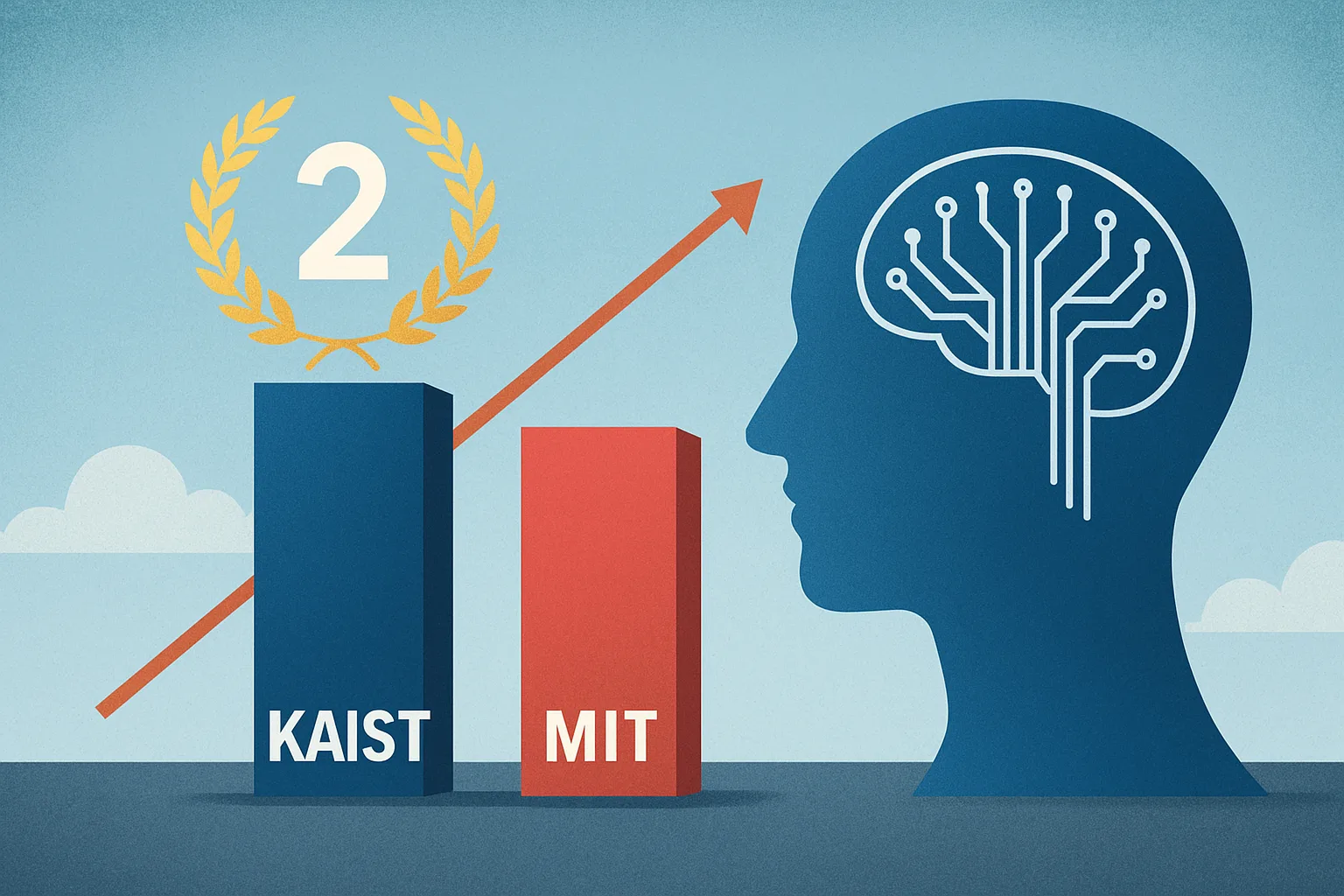
When evaluating the achievements of AI research, one international conference often comes up: NeurIPS, where major work in artificial intelligence and machine learning is presented. An analysis suggests that KAIST ranked second in the number of accepted papers at NeurIPS 2026, based on the first author’s affiliated institution. More papers under KAIST’s name were accepted than those from MIT and Stanford.
According to Money Today, data on NeurIPS 2026 analyzed by AI consulting firm Fastcode AI showed that KAIST researchers were first authors on 166 accepted papers. That placed the university second among 981 participating institutions worldwide. Tsinghua University in China ranked first with 195 papers. MIT recorded 138, Stanford 126, and Carnegie Mellon 94.
Google DeepMind was reported to have 80 accepted papers, while Meta had 35. By country, based on the nationality of the first author, South Korea ranked third after the United States and China. Papers with Korean first authors accounted for 5.6% of all accepted papers, while the United States and China accounted for 32.5% and 26.5%, respectively. Combined, the two countries made up 59% of the total. At the same time, another analysis noted that among countries with populations of more than 20 million, South Korea had the highest number of accepted papers per capita.
The phrase “second in acceptance rate” deserves a closer look. The institutional rankings introduced in the article are based on the number of accepted papers in which researchers from each institution were first authors. Since no data were provided on how many papers each institution submitted, this should not be confused with a strict acceptance rate ranking that measures what percentage of submitted papers were accepted. For example, 166 refers to KAIST’s number of accepted papers, not the acceptance rate of the papers KAIST submitted.
Even taking that into account, this tally still shows that KAIST is producing a substantial number of papers on the global AI research stage. At the country level, the figures also show that the United States and China still dominate in terms of share, highlighting differences in research scale and breadth. Paper counts alone cannot tell the full story about research quality or a country’s overall competitiveness, but looking at both institutional performance and per-capita results offers a more balanced view of the strengths and challenges facing Korea’s AI research.
Related search terms
#KAIST NeurIPS 2026#NeurIPS 2026 accepted papers#KAIST AI research#MIT Stanford NeurIPS#Tsinghua University NeurIPS#Korean AI research ranking#NeurIPS institutional ranking