AI · 2026-10-31
New York Stocks Slide on AI Profitability Concerns… Nasdaq Falls 2.86%
After Alphabet, Amazon and Intel also fell short of market expectations in both earnings and outlook, raising fresh doubts about whether Big Tech’s AI infrastructure investments will actually translate into profits. Against a broad selloff in tech stocks, the Nasdaq dropped 2.86% and the Philadelphia Semiconductor Index fell 7.20%.
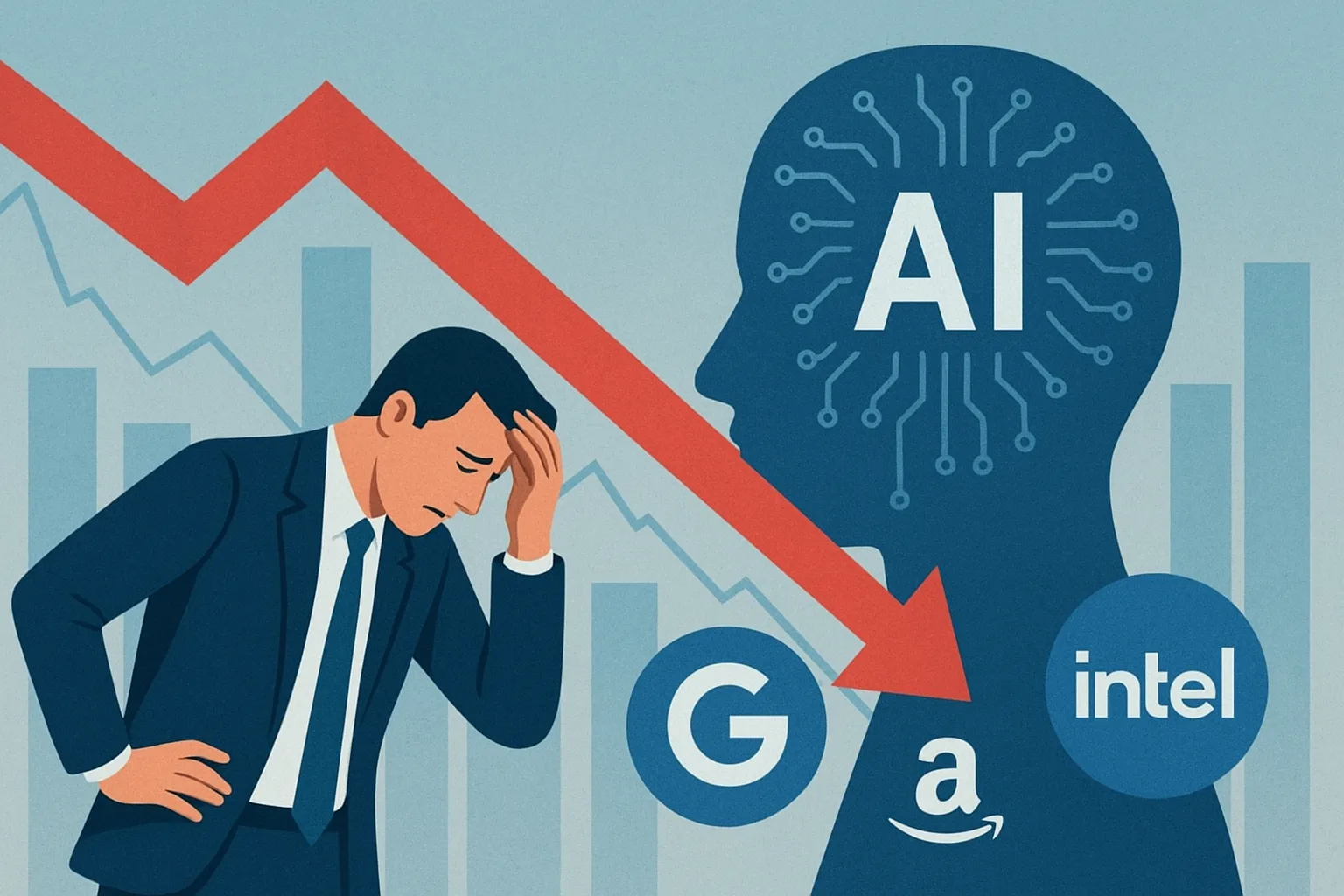
As expectations grow that AI will become a key engine of corporate growth, investors are asking more specific questions. The big one is when, and how much, the money poured into massive data centers and semiconductors will actually come back in the form of profits. After the earnings and forecasts from major U.S. tech companies missed expectations, that question came back into focus, and Wall Street fell sharply, led by technology shares.
AI investment moves into a phase of “proving results”
According to Herald Economy, the Dow Jones Industrial Average fell 1.09% on the 30th (local time), while the S&P 500 declined 1.82%. The tech-heavy Nasdaq Composite lost 2.86%, and the Nasdaq 100 fell 3.46%.
Behind the market’s weakness was the fact that Amazon and Intel, following Alphabet, released earnings and outlooks that failed to meet investor expectations. Even if companies are pouring massive amounts of capital into AI infrastructure, whether those investments are truly translating into higher revenue and productivity is another matter. That is why some are interpreting this as a sign that investors are no longer willing to value companies on expectations alone, and are now demanding verifiable results.
Steep losses in semiconductor stocks
Intel’s stock plunged 28.58% on the day. The Philadelphia Semiconductor Index also fell 7.20%, while Nvidia, AMD, and SK Hynix’s American depositary receipts (ADRs) also weakened. It was a clear sign that semiconductors, a sector closely tied to expectations for AI infrastructure investment, are reacting sensitively to shifts in investor sentiment.
That said, it would be difficult to explain the market’s broad decline solely through AI concerns. According to the report, shares of related companies fell after the hacking incident at cryptocurrency exchange Binance, and Bitcoin prices also declined. Meanwhile, worries about the conflict in Iran escalating pushed international oil prices higher, while ExxonMobil and Chevron rose on better-than-expected earnings. In other words, broader anxiety across risk assets and tension in the energy market were both at play.
What to watch next
This pullback does not necessarily mean that the growth potential of the AI business has disappeared. Rather, it suggests that the market is starting to scrutinize the gap between investment 규모 and profit generation much more strictly. Going forward, Big Tech earnings will likely be judged not only by how much AI-related spending has increased, but also by how that spending is affecting revenue and profits. That said, it would be premature to draw long-term conclusions from a single day’s stock movement alone; instead, it will be important to watch whether each company’s earnings and investment plans are actually turning into results.
Related search terms
#AI investment profitability concerns#New York stock market selloff#Nasdaq falls on tech stocks#Philadelphia Semiconductor Index decline#Big Tech AI infrastructure spending#Intel stock plunge#Amazon earnings outlook miss#AI stocks and semiconductor shares