IT · 2026-10-29
Could the iPhone Duo’s Broken Screen Be Caused by the Hinge? The Possibility of Stress Concentration in a Folding Display
Soon after the iPhone Duo launched, some users reported that the inner display cracked near the hinge. iFixit’s teardown analysis suggested the hinge components may have pressed against the screen and created a point of damage, but Apple said the affected devices were only a “small number.”
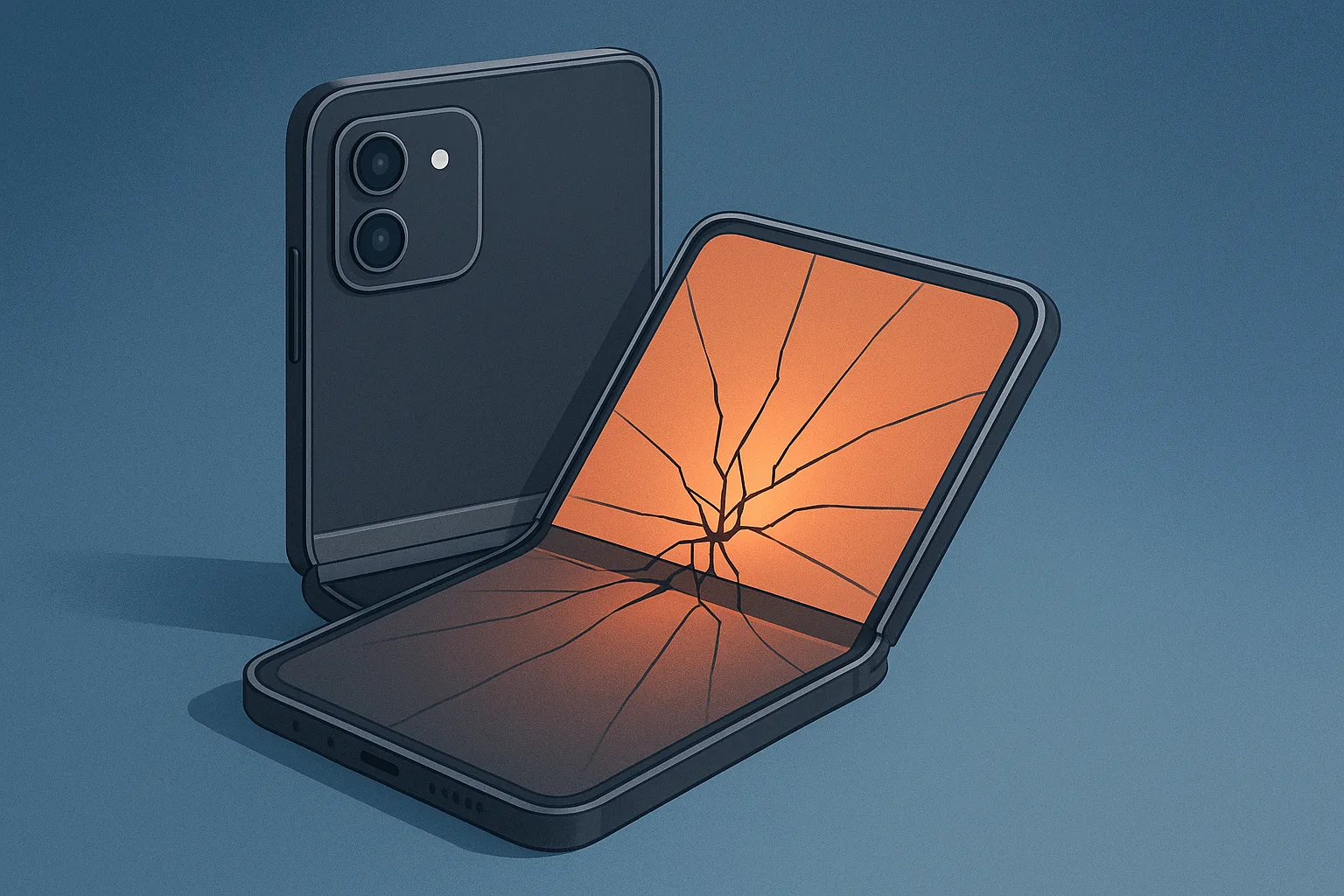
In a foldable smartphone, the screen and the hinge are hard to separate. For the display to fold smoothly, the hinge has to create space on the inside, and even a small part pressing against the screen can cause problems. In the case of the iPhone Duo’s broken screen reports, an analysis has raised the possibility that the hinge structure may be the cause.
Soon after launch, some users reported cracks in the center of the inner display, above the hinge, or black marks appearing on the screen. Apple said it is replacing damaged products and explained that the issue has affected only a “small number” of devices. However, it has not disclosed specific figures, including how many breakage cases have been reported so far.
The possibility that hinge parts are pressing against the screen
The Verge cited analysis from iFixit teardown technician Sharam Mokhtari. After taking apart the iPhone Duo, he said there could be a problem where the internal support structure of the hinge meets the display. The hinge is a complex mechanism that keeps the device closing flat while also creating enough room so the screen does not bend too sharply, and in that process, the inner display may be pushed by some of the hinge’s components.
During the teardown, the central support structure was found to have a design that leaves room for cables while also creating several edges. Mokhtari said that if the central support does not drop down enough when the phone is folded, a “stress concentration point” could form, where pressure builds up between the flat support and the folded display. He also linked the location of the black dot seen in some damage photos posted on social media to the possibility that a metal component made contact with the screen.
That said, this does not mean the cause has been confirmed. The analysis described in the article is based on teardown findings and reported damage cases. One user said they felt something was off inside the hinge, kept opening and closing the device, and later found the screen cracked. Durability test videos have also shown screen damage and hinge component damage at similar locations, but cases like these are not enough to judge the overall defect scale of the product.
Challenges revealed by a first-generation product
Foldable displays are structurally more delicate than ordinary glass screens, and hinges are also complicated mechanisms made up of multiple interlocking parts. So the fact that some units failed does not automatically mean there is a widespread defect. On the other hand, it is worth watching whether similar breakage continues to appear and whether the same issue persists even after replacements.
Apple has not announced a recall at this point. Mokhtari said that if breakage continues to be confirmed over time, it could be judged as a broader problem, and in that case it could lead to recall discussions. He also suggested that since this is Apple’s first-generation foldable device, information gathered from real-world use and repair processes could be reflected in the next generation’s design.
What has been confirmed so far is that some devices have suffered screen damage, Apple is offering replacements, and pressure may have concentrated around the hinge area. The immediate question is whether the damage remains limited to a small number of cases or keeps recurring in the same form. Whether the hinge structure is truly the cause can only be determined once more cases and Apple’s explanation become available.
Related search terms
#iPhone Duo screen damage#foldable phone hinge issue#iPhone Duo hinge crack#stress concentration in foldable display#Apple foldable phone repair#iFixit iPhone Duo teardown