AI · 2026-10-27
Bucheon’s First 100 Days Under the 9th Popularly Elected Administration: How Far Have Its Livelihood Policies and AI and Transport Strategies Come?
From everyday policies such as improving labor conditions, expanding care facilities, and maintaining parks to fostering the AI industry and strengthening metropolitan transport networks, here’s a look at Bucheon City’s key tasks and what to watch next as the 9th popularly elected administration marks its first 100 days.
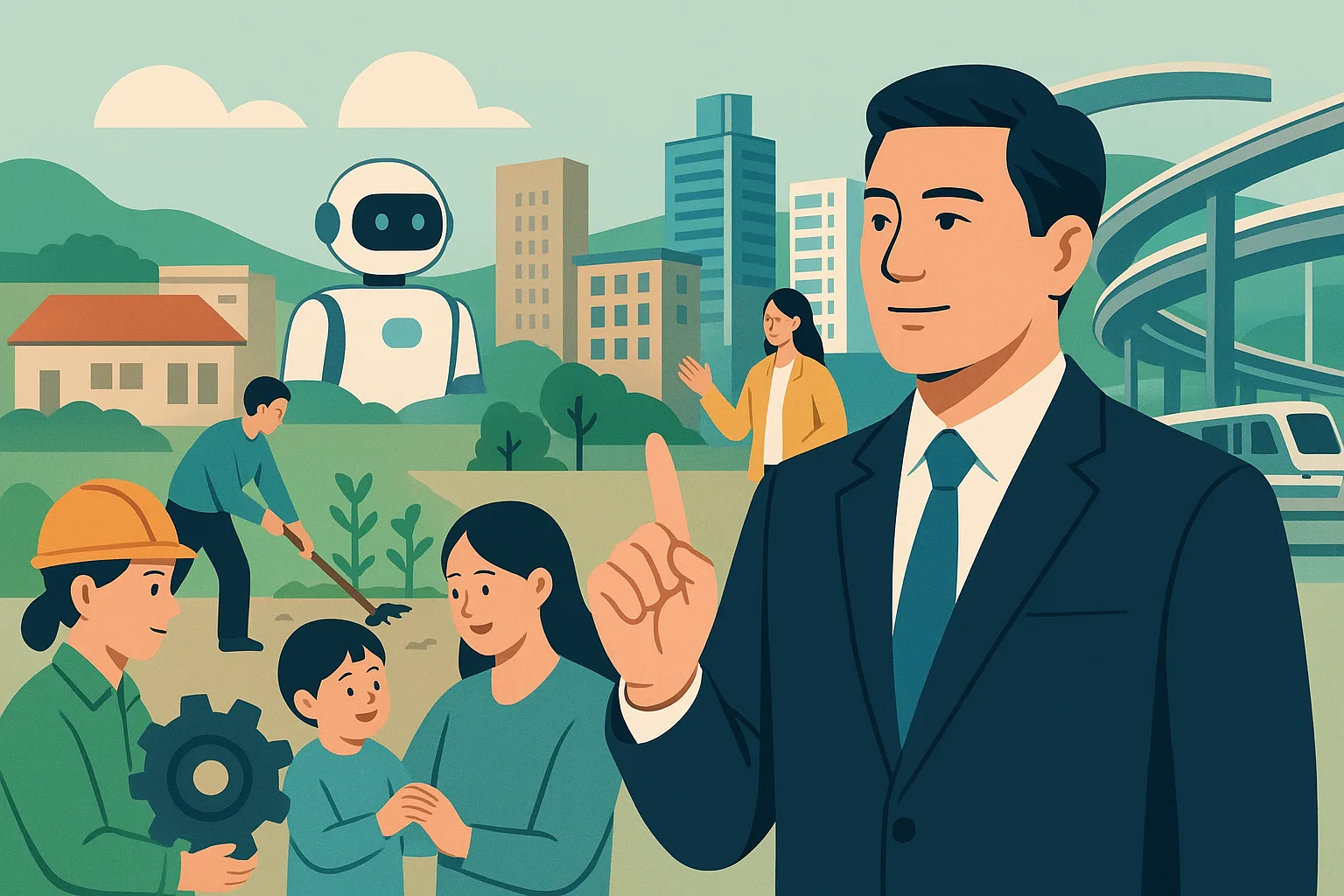
Reducing everyday inconveniences that residents actually feel and laying the groundwork for a city’s future growth are not separate goals. As Bucheon City passes the 100-day mark since the launch of its 9th popularly elected administration, it is pushing ahead with labor, care, and living-environment improvements alongside the AI industry, metropolitan transport, and urban-space restructuring. Based on the content reported by Kyeongin Ilbo, here is a summary of the main directions.
Finding policy tasks on the ground
Bucheon City’s first approved project under the 9th administration is the “Right Away, Step by Step Project.” The idea is to move quickly on changes needed in residents’ daily lives, not just on large-scale development projects. Mayor Cho Yong-ik visited places such as the Labor Welfare Center, the I Love Mom Cafe, and Bucheon Sports Complex, where he spoke with residents about labor conditions, childcare, and everyday sports and leisure facilities.
According to the report, the labor sector has identified tasks such as expanding rest spaces for platform workers, launching a “1,000-won laundromat” for workers at small and micro businesses, and establishing a dedicated labor policy team. In childcare, the plan includes expanding 365-day hourly daycare centers currently operating in Wonmi-gu to each district and gradually increasing the number of Bucheon-style kids cafes. These are proposed measures, and the facilities and services that will actually be available will need to be clarified as the projects move forward.
Park and healthy-city policies also stand out. Ojingeo Grand Park is planned to be expanded from its current area of about 49,000 square meters to about 119,000 square meters, and will include a greenhouse-style rest facility, a viewing space, and barefoot walking paths. Bucheon City has also been selected as the 11th chair city of the Korea Healthy Cities Partnership and is expected to serve in that role for two years starting in 2027. The vision is to broaden healthy-city policies that look not only at health care and medicine, but also at housing conditions, everyday sports, and welfare.
AI, transport, and urban space as future growth engines
At the heart of the mid- to long-term strategy are the Sangdong Special Planning District, the Bucheon Daejang Urban Advanced Industrial Complex, and the area around Bucheon Sports Complex. Bucheon City has presented these three areas as pillars that will lead future growth, and is pushing ahead with a direction that connects advanced industry, cultural industries, new jobs, and urban functions.
Administrative reorganization has also been presented as a way to support this plan. The proposal includes changing the Economy and Environment Bureau into the AI Economy Bureau and strengthening AI policy and digital transformation through the AI Convergence Division and the Digital Information Division. It also includes creating a Rail Policy Division under the Transportation Bureau to handle key metropolitan transport issues such as undergrounding the Gyeongin Line and the Greater Seoul metropolitan express rail network, or GTX, as well as setting up a Spatial Strategy Team within the Urban Planning Division. However, the reported target for implementation is January 2027, and related ordinance revisions and city council review still remain. It is important to distinguish between confirmed achievements and plans under way.
What to watch next: execution ability
Bucheon City’s policy direction is aimed at reducing inconveniences in daily life while also strengthening the city’s long-term competitiveness. Tasks that can be felt close to home, such as labor and care support and park expansion, have been placed in the same package as projects that will take time, such as the AI industry, railway networks, and urban restructuring.
That said, because administrative reorganization and railway and urban development projects require consultations with related agencies and funding arrangements, the process of turning plans into actual projects will be crucial. From residents’ point of view, the key questions are when and where facilities and services will become available, and how the projects will translate into better living conditions. More than the number of policies announced, Bucheon City’s evaluation after the first 100 days is likely to depend on whether residents can feel changes in their everyday lives.
Source: 부천시'다시 함께 더 큰'민생행보 100일
Related search terms
#Bucheon 9th popularly elected administration#Bucheon City policy 100 days#Bucheon AI industry strategy#Bucheon metropolitan transport plan#Bucheon childcare and welfare policies#Bucheon park development#Bucheon urban development plan