AI · 2026-10-21
U.S. federal agencies barred from using DeepSeek; China says it will take necessary measures
The United States has removed DeepSeek products and related services from federal civilian IT systems and banned new procurement. China has pushed back, saying it will defend the rights and interests of its companies, as U.S.-China AI tensions spill into government systems and public procurement.
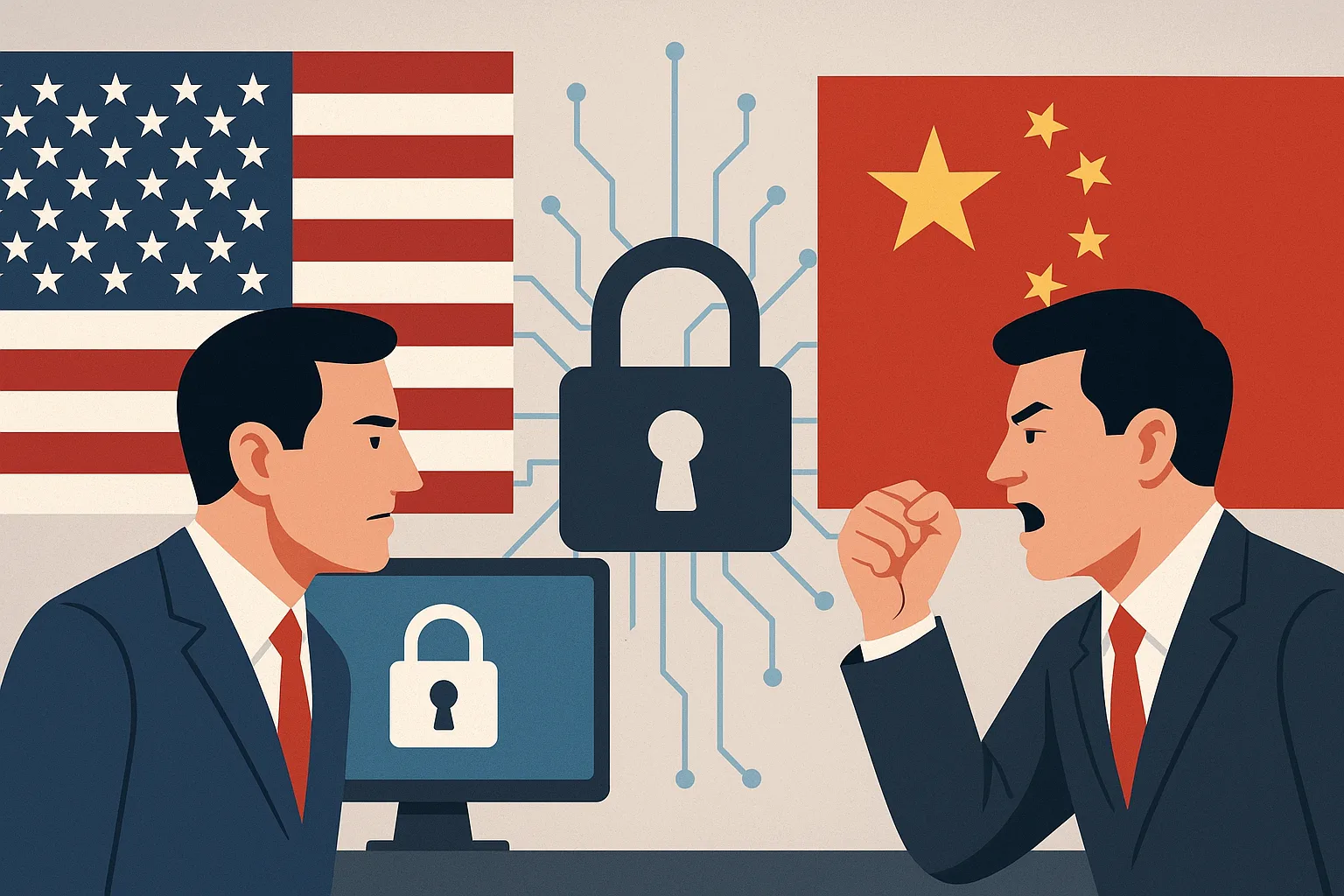
A single AI service being removed from a government work system has escalated into a diplomatic dispute between the United States and China. After the U.S. banned the use of products from Chinese AI startup DeepSeek in federal civilian IT systems, the Chinese government pushed back and said it would take the necessary countermeasures.
The U.S. Department of Homeland Security notified federal civilian agencies to remove not only DeepSeek products, but also third-party products and services developed using DeepSeek technology, from their IT systems. It also banned new procurement of related products and services. According to a Digital Today article citing AP and Bloomberg, the move follows an order issued at the end of July.
At the heart of the U.S. concerns are data and access rights. A notice published in the Federal Register said DeepSeek models present multiple threat vectors. The concern is that, because DeepSeek’s servers are located in China, Chinese authorities could potentially access sensitive U.S. data through the infrastructure of private companies. That said, this is a security concern raised by the U.S., and based on the facts presented in the article alone, it cannot be said that actual data access has been confirmed.
A spokesperson for China’s Foreign Ministry said China would firmly safeguard the lawful rights and interests of Chinese companies, and opposed the excessive expansion of the concept of national security. China’s Ministry of Commerce also expressed strong dissatisfaction and opposition to the U.S. measures. It argued that the United States is using national security as a pretext for discriminatory restrictions to contain China, and said it would take all necessary measures to protect its legitimate rights and interests.
DeepSeek’s open-source models are used in many countries, including the United States, and are offered mostly free of charge. An open-source model refers to a model that developers can download, use, or modify. As such, restricting use by government agencies directly affects those agencies’ work systems and procurement, but based on what is stated in the article, it would be difficult to interpret this as a ban on all private-sector use.
The latest move shows that AI competition is expanding beyond semiconductors and model development into security issues involving government systems and public procurement. According to the article, the U.S. has restricted China’s access to advanced AI chips and manufacturing equipment, and has alleged that Chinese AI companies have been distilling large-scale performance gains from advanced U.S. models. China has denied the allegation, while also recently proposing restrictions on the export of some advanced AI models.
The two countries have made some progress in AI governance cooperation, but remain at odds on many issues. Digital Today reported that the latest warning highlights the strategic distrust between Washington and Beijing. With AI expected to be a major topic at future U.S.-China summit meetings, the key question is whether security concerns and technology controls will lead to real cooperation or trigger even more restrictions.
Source: 美 정부 시스템서 딥시크 퇴출…중국 "가만있지 않겠다"
Related search terms
#DeepSeek ban in the U.S.#U.S.-China AI tensions#federal civilian agencies DeepSeek#AI procurement restrictions#Chinese AI startup DeepSeek#U.S. Department of Homeland Security AI ban#China response to U.S. AI measures