AI · 2026-10-20
U.S. Bans DeepSeek AI Use in Federal Agencies: Which Offices Are Covered and Why
The U.S. government has barred the use of DeepSeek AI models and related technologies in civilian federal agencies, including the Treasury, State, and Justice Departments. Agencies under the Defense Department are excluded, and the U.S. has not disclosed specific security concerns.
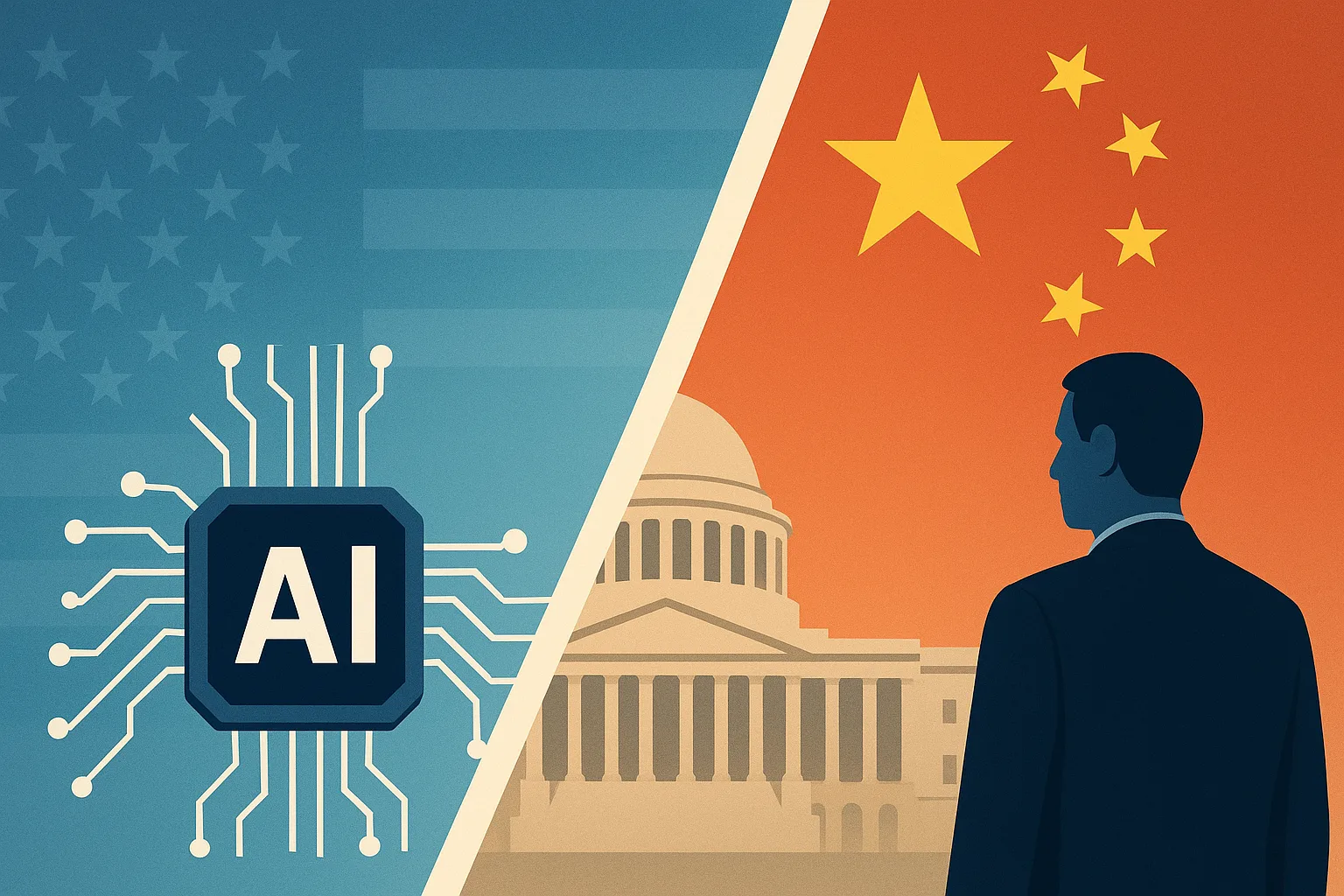
The U.S. government has decided to remove the technology of Chinese AI company DeepSeek from federal government systems. The Department of Homeland Security (DHS) disclosed only later that it had already begun enforcing a ban at the end of July. The measure applies not only to DeepSeek’s AI models, but also to technologies developed on top of them.
The restriction covers civilian federal agencies such as the Treasury Department, the State Department, and the Justice Department. However, agencies under the Defense Department are excluded from this measure. In other words, it should not be interpreted as a nationwide ban on DeepSeek use by all companies or individuals in the United States. What has been confirmed so far is a restriction on federal agency systems and operations.
One notable point is that the U.S. government has not revealed exactly what security concerns it has in mind. The measure comes amid a broader push by the Trump administration to tighten its scrutiny of Chinese AI companies. Earlier this year, the White House’s top technology policy official noted in an internal memo that Chinese rival companies were maliciously exploiting U.S. AI technology. OpenAI and Anthropic have also argued that some Chinese companies, including DeepSeek, essentially copied their AI models. Those are the companies’ claims, however, and the government has not publicly disclosed specific grounds for the ban.
DeepSeek drew attention after it was first released in 2025, thanks to its low cost and strong performance, and its open-source model led to broader use among U.S. companies and startups. DeepSeek said it cost about $6 million to train its initial AI model. Compared with the roughly $100 million estimate cited for GPT-4 development costs, that is a substantial gap, but it should be noted that both figures are, respectively, a publicly stated claim and an estimate.
China’s Foreign Ministry opposed the U.S. move, saying it rejects the generalization of national security and the politicization of science, technology, and economic issues. The controversy surrounding DeepSeek is expanding beyond AI performance and cost competition into a broader question: which technologies governments can trust and allow in their systems. Still, since the U.S. government has not 공개 the specific concerns or reasoning behind its judgment, debate over the scope and motivation of this measure is likely to continue.
Related search terms
#DeepSeek AI ban in the US#U.S. federal agencies DeepSeek use restriction#Department of Homeland Security DeepSeek ban#China AI company DeepSeek controversy#U.S. government security concerns over DeepSeek#civilian federal agencies DeepSeek