AI · 2026-11-02
Meta Credit Outlook Cut to ‘Negative’ as S&P Flags AI Investment Burden
S&P has lowered Meta’s credit outlook to ‘negative.’ The move reflects rising investment in AI infrastructure, higher leverage, and uncertainty over when those investments will start paying off. That said, this does not mean the agency has cut Meta’s current credit rating or is actively considering a downgrade right now.
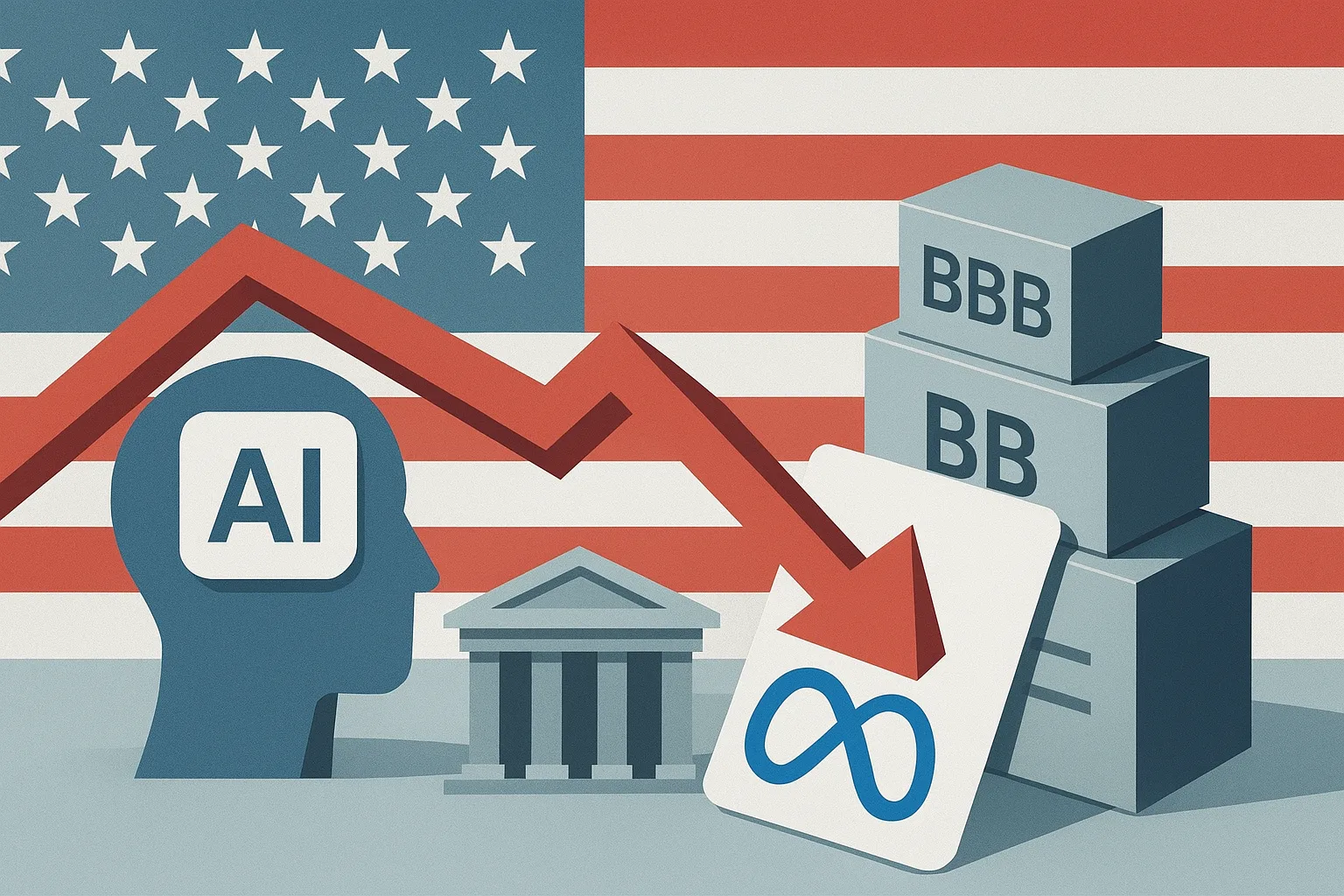
Winning the AI race requires massive spending, but whether that spending turns into real profits is another matter. That appears to be the concern behind international ratings agency S&P Global Ratings’ decision to revise Meta Platforms’ credit outlook to ‘negative.’
On the 30th of last month, S&P kept Meta’s credit rating at ‘AA-’ while lowering the outlook from ‘stable’ to ‘negative.’ The main reasons cited were the financial burden of expanding AI-related spending and rising leverage. Leverage is a measure used to assess how much debt burden a company carries relative to its earnings.
### The key issue is the gap between AI investment and monetization
Developing and operating AI services requires heavy spending on infrastructure such as data centers and semiconductors. But even if investment rises sharply, revenue and cash flow do not necessarily increase at the same pace. S&P judged that Meta may have more limited ability than competitors to convert AI investment into profits, and that the timing of when spending will translate into meaningful revenue growth remains unclear.
The agency also pointed to uncertainty over how long capital expenditures will stay at elevated levels and how long negative free cash flow will continue. Free cash flow is the cash left after subtracting spending on capital investments and other outlays from the cash generated through business operations. If this flow remains weak for an extended period, it can weigh on a company’s investment capacity and financial flexibility.
### A ‘negative outlook’ does not mean an immediate downgrade
This adjustment does not mean Meta’s credit rating has already been lowered. Its current rating remains ‘AA-.’ A ‘negative’ outlook suggests that a downgrade is possible within the next two years, but it does not mean S&P is actively preparing to cut the rating right away. In other words, the focus now is on how investment spending, cash flow, and the monetization of AI initiatives develop from here.
Meta said it disagrees with S&P’s assessment of AI monetization. The company said it sees significant opportunities across its products and businesses and believes it can maintain a strong credit profile on that basis. Seen this way, the situation reflects a difference between the rating agency’s concerns about financial strain and the company’s expectations for growth.
More broadly, this is not just about Meta. It also highlights the market’s growing attention to when, and how much, the huge sums big tech companies are pouring into AI infrastructure will translate into tangible returns. Going forward, how much Meta’s AI-related revenue helps offset investment costs and whether cash flow improves are likely to be the key factors to watch in assessing its credit outlook.
Related search terms
#Meta credit outlook negative#S&P Meta AA- rating#Meta AI investment burden#Meta free cash flow#AI monetization and credit rating#big tech AI infrastructure spending#S&P Global Ratings Meta